
6 Ways You Can Transform a Kids’ Room with Paint
Designing a nursery or kids’ room can be so fun. You’re creating the space you’ll bring them home to, as well as where they’ll play, learn, and grow for many years. Of course, when they’re older they’ll have their own ideas about how they want their rooms, but when they’re tiny, you get all the say over how their rooms look and feel.
A big part of any kid’s room design is what color to paint the walls. To get your creative juices flowing, here are some children’s room paint schemes to consider:
A soft background color
Paint that’s a soft background color plays gently with the other elements in the room. Maybe you pull a color from the rug or some art on the wall. The color isn’t overpowering, and probably not even the first thing you notice, but it plays a significant role in the way a room feels.

The medium blue wall color in this playful nursery for boys is an integral part of the room’s overall theme, but it doesn’t scream “blue.” The color being used on every wall also functions to create a soothing cocoon-like feel in the room, perfect for a nursery.
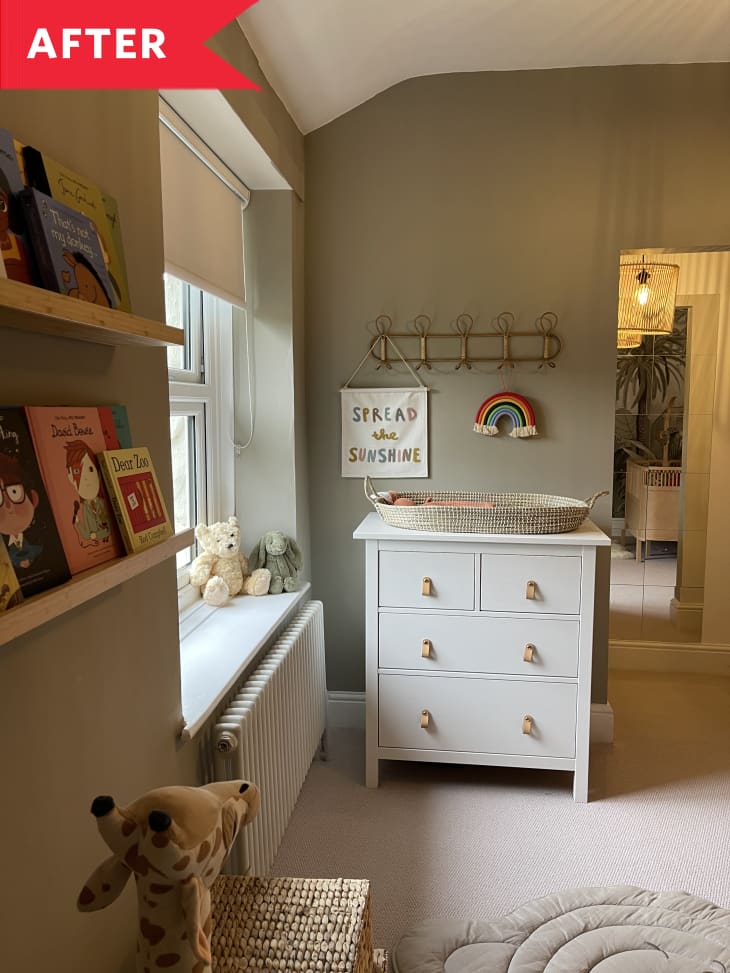
The green in this tropical Boho nursery plays an even less front-facing part in the room. The soft green echoes the tropical wallpaper, and although it’s definitely a background color, it makes the room feel like a warm hug.
A color-drenched presence
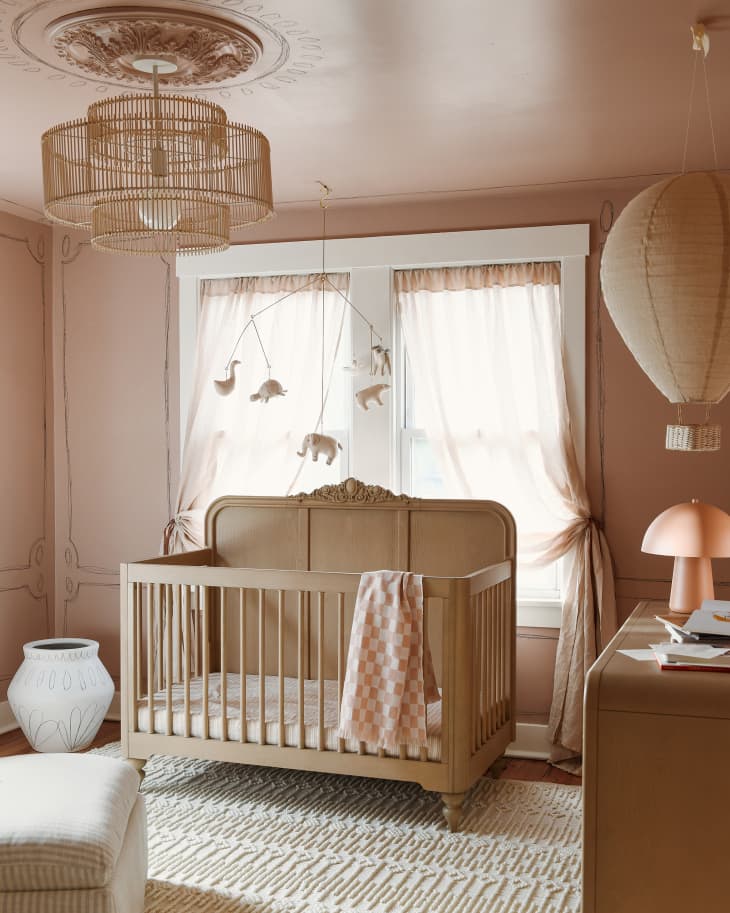
In contrast to paint being a soft background color in a child’s room, paint can act as primary contributor to the overall feel of the room. The lovely pink in this playful Parisian-inspired nursery, which also coats the room’s ceiling, is the room, transporting everyone who enters into a girly Parisian space, just as intended.
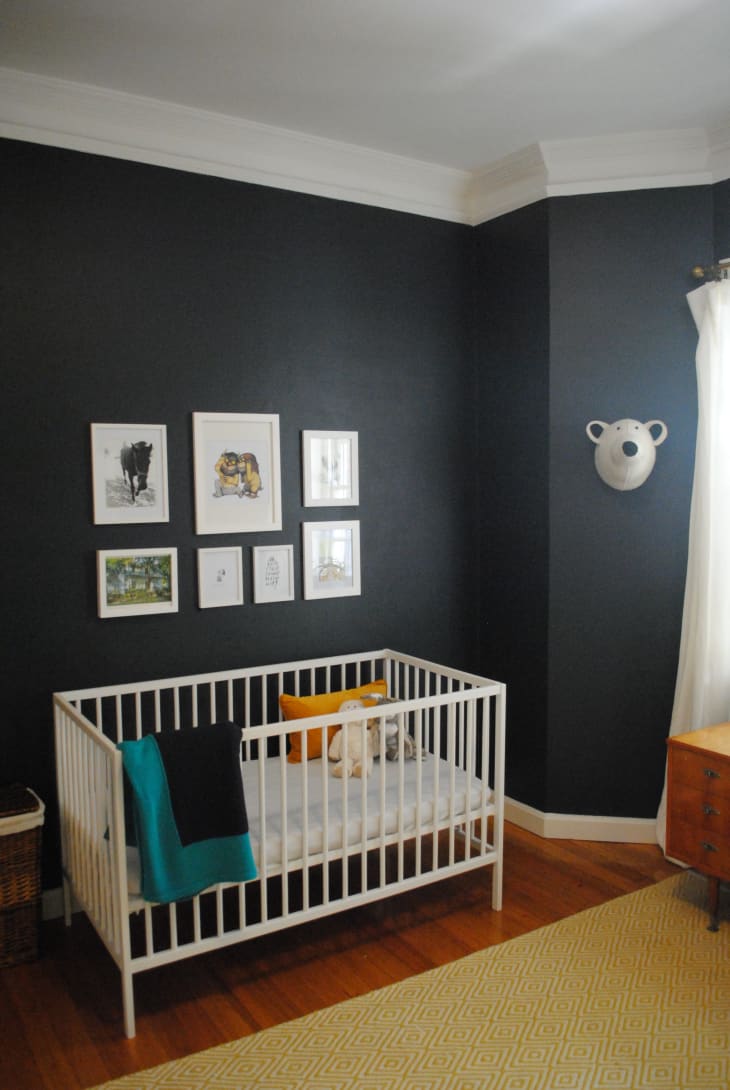
While the dark, strong blue in this restful nursery isn’t necessarily “drenching” the room, the paint color nevertheless makes the room what it is. When choosing this type of paint scheme, consider the overall mood you wish to evoke and fully embrace a paint color’s power to take you straight there.
A statement color
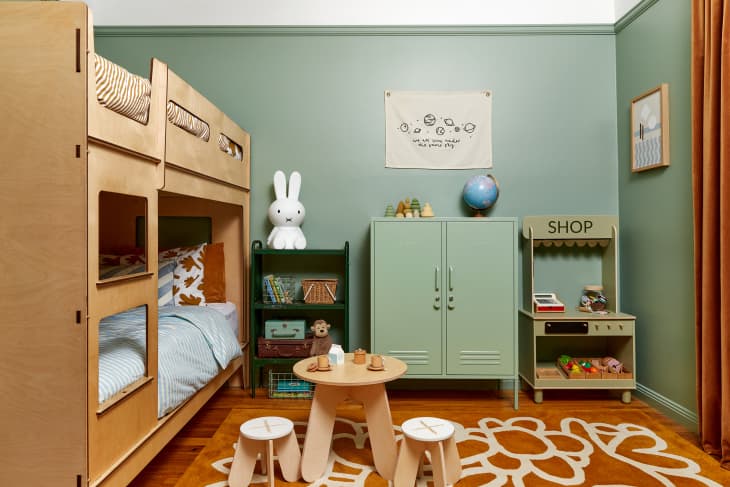
The paint colors in the previous section elicit a sense of place and provoke a particular feeling, but paint can also be the statement, in and of itself. Usually the colors used in this way are bold and unexpected.
This is the case in the color chosen for this gorgeous green kids bedroom. The color is unusual and feels almost nostalgic, but one thing is sure: It can’t be ignored. The color alone makes the room fun and interesting, and not much else is needed to decorate if a sparer look is preferred.
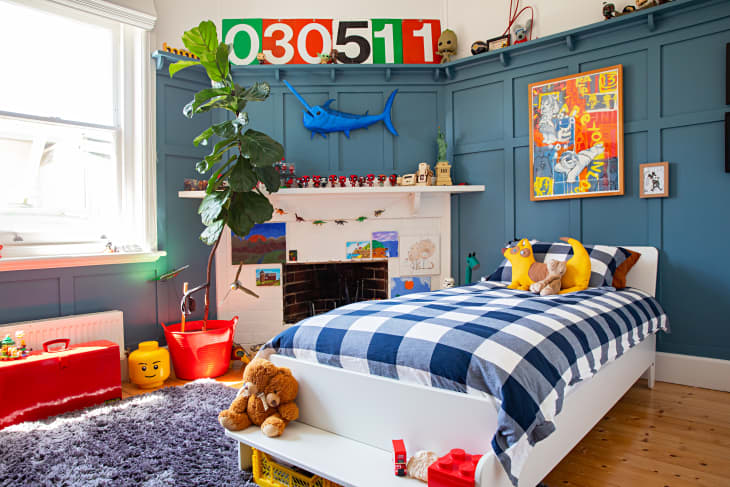
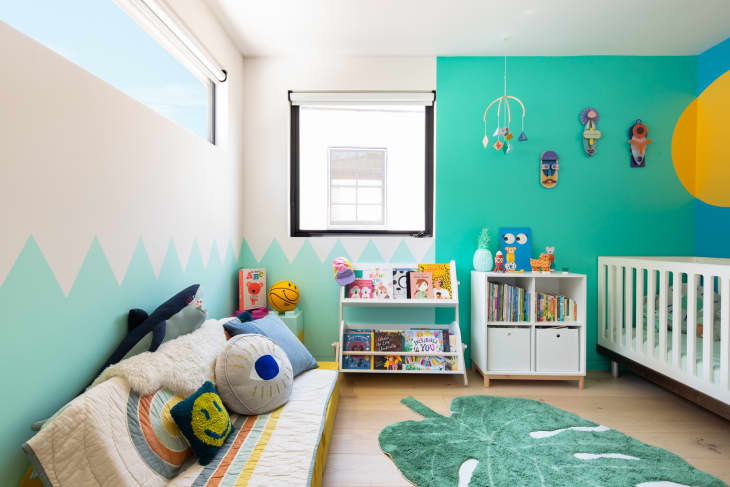
On the other hand, a bold color also fits perfectly into an eclectic, maximalist sensibility, as in the case of the bright teal in these quirky kids bedrooms. The paint refuses to be in the background, instead vibing perfectly with the rest of the room as if the walls couldn’t possibly be any other color.
An accent
Just like in any other space in the house, the paint color in a child’s room doesn’t have to cover the entire room or even an entire wall. But in a kids room, you can usually have even more with accent colors.
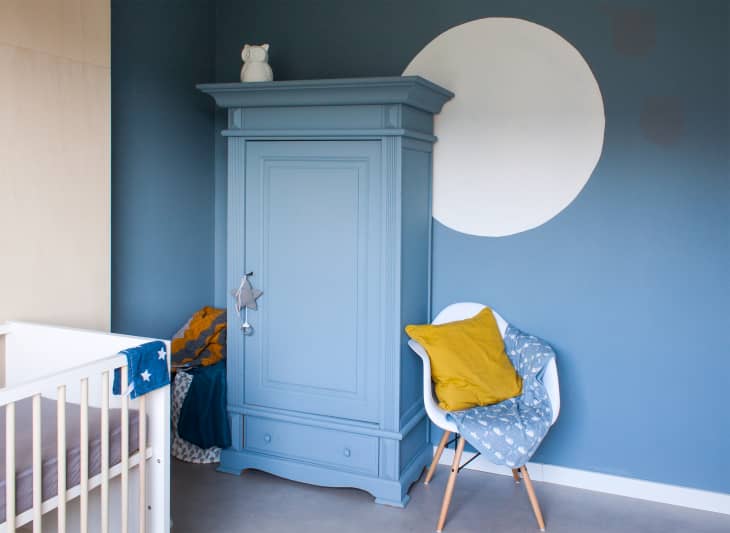
The blue wall in this cozy nursery boasts a playful circle, reminiscent of a sun or moon and a just plain playful shape. Here, an accent color and even the missing paint on the accent wall uses paint to create an atmosphere of joy.

The bright blue in this British kid’s room uses paint as an accent on just the lower part of the wall all around the room. The placement is fun, the color is fun, and the contrast between the white and blue creates a playful tension that suffuses the room.
A blank slate
Don’t underestimate the power of white paint. That’s just as valid a choice and sets just as much of a mood as any other color. Indeed, with all the gear and activities that go along with kids, a blank slate wall color allows other pieces to stand out and can help keep a calm atmosphere in the midst of all the noise.
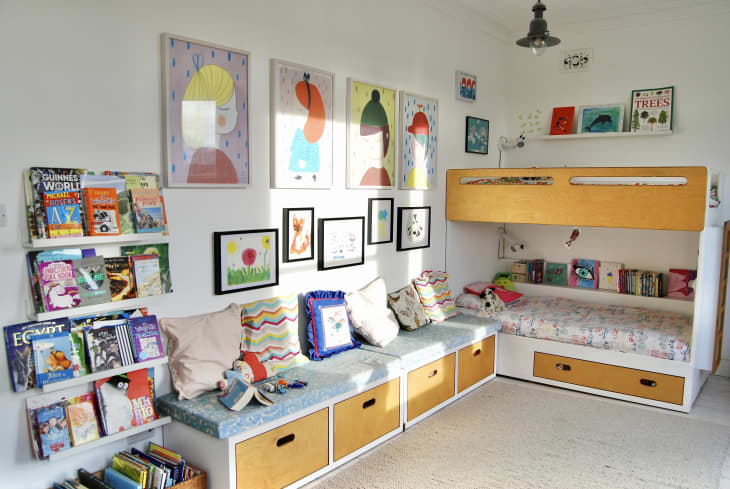
As demonstrated in this colorful shared kids room, white walls allow other colorful pieces to pop, showing that white room for kids can be anything but boring. The same can be said for the white walls in this bright and cheery nursery.
If you feel like you want to keep your kids’ walls white, don’t let any preconceived notions about what colors kids rooms “should” be painted dissuade you.
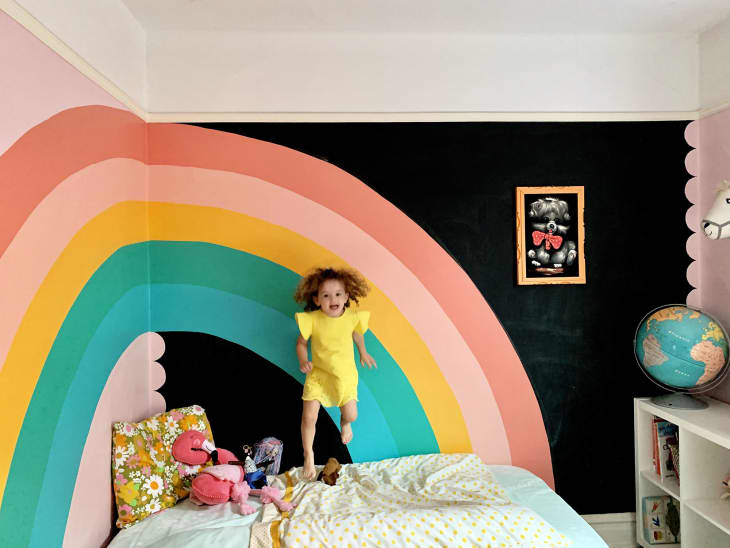
Murals
On the complete opposite end of the spectrum, murals use paint to create the drama in the room. The spectacular rainbow mural in a girl’s bedroom adds a wonderful bit of drama and flair.
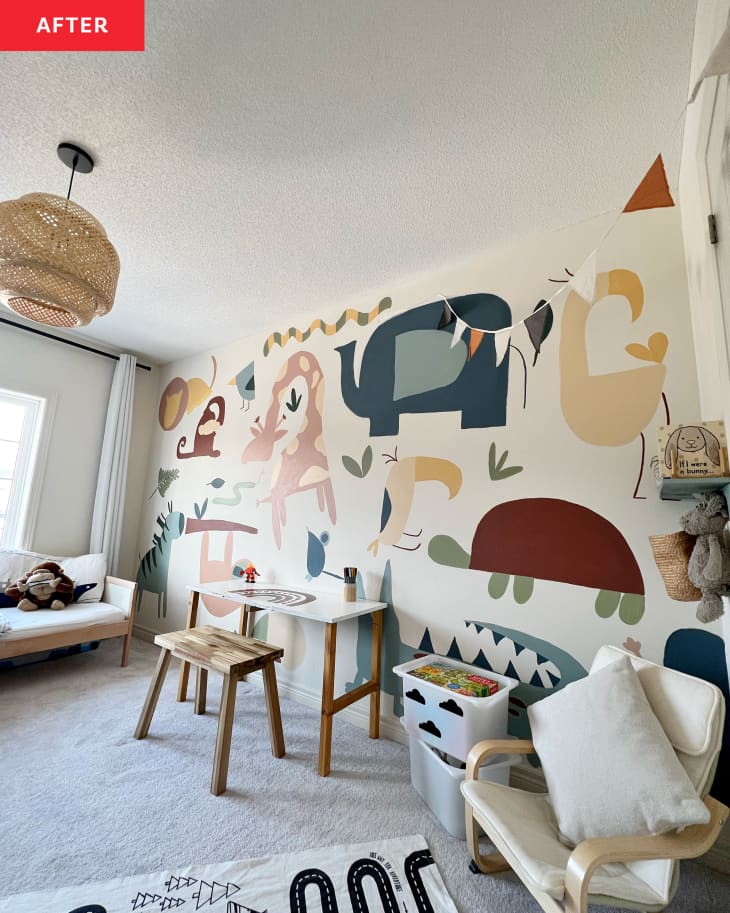
Although drastically different in style, the animal mural in this kid’s bedroom is also created using paint. When used for murals, the paint becomes the medium for art in which the walls of the room are a large and waiting canvas. What a gift to the children who get to live alongside them.