
The Best Blackout Curtains for the Nursery (Because You *Need* Your Baby to Sleep)
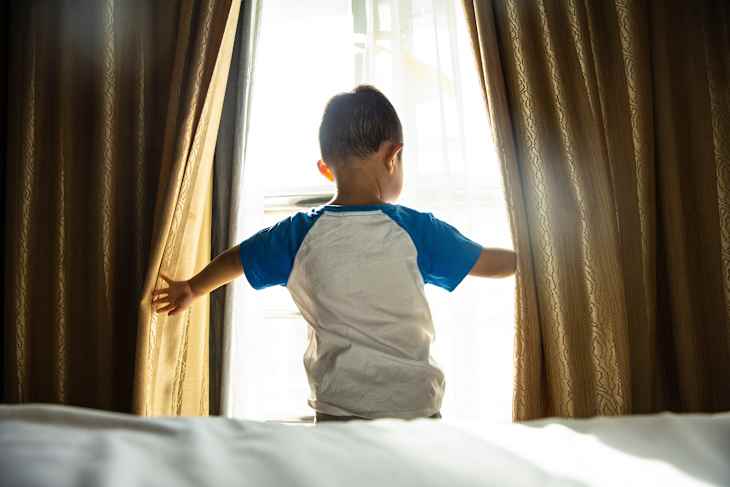
Back when I had a baby in the house, I suffered from what I jokingly called “Don’t Wake the Baby Syndrome,” a mostly imagined condition wherein I would go absolutely bonkers if a barking dog, postal worker, or stray beam of light happened to rouse my baby from her slumber.
I remember one afternoon, after a night of irregular feedings and little actual sleep, I had just gotten the baby down for a nap and was preparing to have a little “me time,” aka folding laundry while watching reruns of Quantum Leap, when a well-meaning neighbor RANG THE DOORBELL, which woke the baby and sparked my rage.
It was a real “if looks could kill” moment, and after that I started researching ways to soundproof and lightproof my newborn’s room, which included investing in blackout curtains and a white noise machine and putting a sign on the front door advising visitors to either text me or back away slowly if they valued their lives.
Why Blackout Curtains Are Essential for a Baby’s Room
When you’ve got a baby in the house, every minute of sleep is a precious commodity — for both you and your baby. Newborns, in particular, need about 16 to 18 hours of sleep, which includes naps. And toddlers still need about 11 to 14 hours. Blackout curtains create a dark, distraction-free environment that facilitates a baby or toddler drifting off to sleep and staying asleep soundly. The lack of light stimulates a baby’s natural melatonin production, which helps them literally train their bodies to sleep — and using blackout curtains can help babies around 4 months old establish their circadian rhythm, which regulates sleep cycles.
New parents know all too well that babies don’t follow a traditional grown-up (or even big kid) sleep schedule, and those midday naps are crucial. But if a room is too bright, it can be difficult for some babies to settle into a peaceful slumber. Blackout curtains and noise-reducing curtains can help create an ideal environment by reducing stimulation, creating a cooler space, providing privacy, and even potentially blocking U/V light.
Top Features to Look For in Nursery Blackout Curtains
- Materials: Look for blackout curtains made from heavy-duty fabrics like tightly woven cotton or velvet with true blackout lining in order to block out 100% of the light.
- Safety: Avoid corded curtains, and be sure the curtain rod is securely mounted, with curtains away from baby’s grasp.
- Design: Find a design that complements your color palette and decor. Consider the length and width of your curtains as well as the type of hanging style to create a visual feature that makes sense in the space you’ve created.
How to Choose the Right Size & Style for Your Nursery
In general, consider the feeling you’re trying to achieve in your nursery, and choose fabrics that reflect that vibe, whether it’s posh and elegant or homey and cozy. Always measure your windows before purchasing curtains and hardware. Also, consider the maintenance aspect of your curtains — washable, stain-resistant, and wrinkle-resistant curtains will make a busy parent’s life just a little easier than curtains that require dry-cleaning or otherwise tedious care.
Focus on functionality when choosing curtains, as they will likely be getting a lot of use, as you open and close them according to your baby’s sleep schedule. If allergies are a concern, you may want to invest in hypoallergenic fabrics. To avoid chemicals and other unwanted construction materials, choose curtains that are OEKO-TEX certified.
Avoid corded curtains to minimize strangulation risks, and decide if you want a curtain that will touch the floor or fall just below the window frame. Short curtains should fall about six inches below the windowsill. Also if obscuring all light is your objective, you’ll want to look for curtains with pinch pleats, rod pockets, or flat top panels. Grommet tops and tab tops have gaps that light can shine through.


