
The One Thing Every Family Home Needs (People Love It When They Visit!)
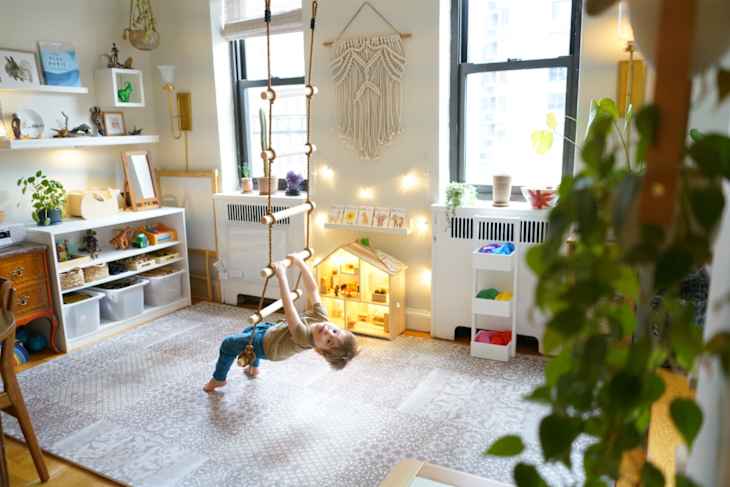
I’m known for squeezing a rock climbing wall into my 650-square-foot, one-bedroom apartment, so you’d think that would be my top recommendation. But if you can only add one piece of movement equipment for your kids, make it a swing. Nothing else comes close.
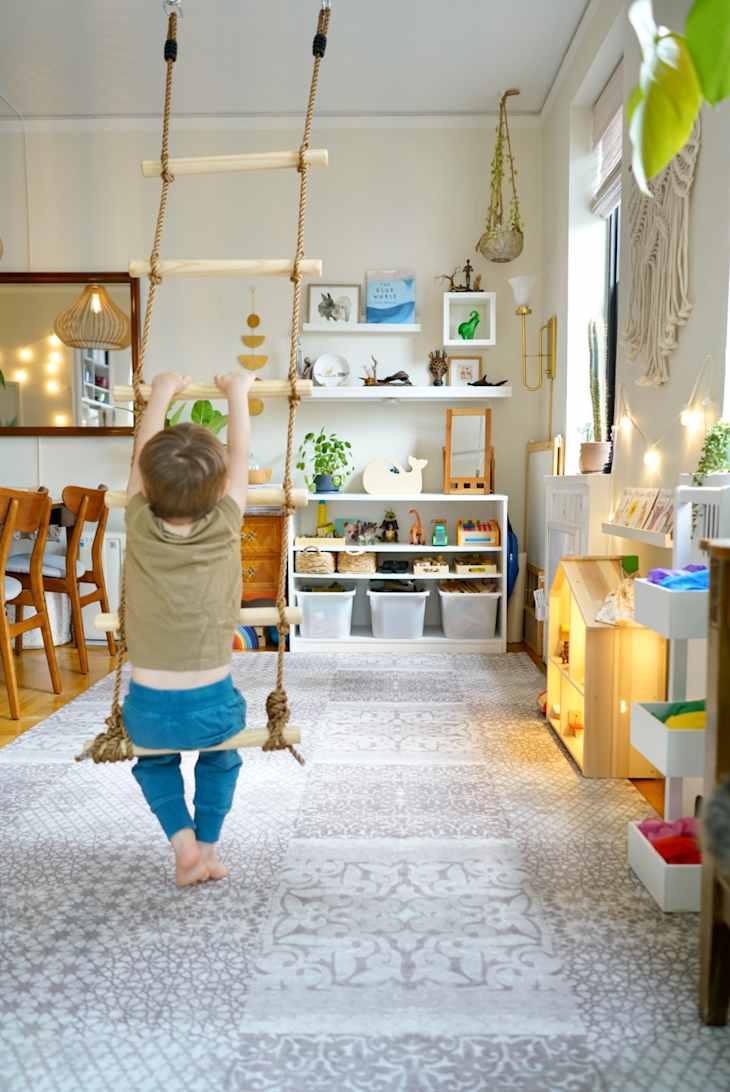
Swings calm the wiggles, quiets busy minds, fuel imagination, and bring everyone together. My three kids take turns using it solo, spinning and swinging until they tire themselves out, or they’ll pile in together — a tangle of limbs and giggles — while I push them. The right swing hook setup can transform into almost anything: a disc for spinning, a rope ladder for climbing, a cocoon for sensory regulation, and so much more.
Bonus: grown-ups love it, too. In fact, when viral apartment tour host Caleb Simpson came to film my home, he skipped the bed test he’s known for—and went straight for the swing.
Here’s why we love having a swing inside our home:

1. Swinging helps kids regulate big feelings.
Some kids need to talk it out. Others need to move it out. In our house, movement is one of the quickest ways to help shift a mood—and swinging works like magic. There’s something about that swaying motion that can reset the whole system. It’s the same instinct that makes you rock a baby when they’re fussy. Older kids may not fit in your arms anymore, but they still can benefit from rhythm to calm their bodies and minds.
We’ve made it a part of our emotional toolkit, a go-to after a meltdown or a rough moment. Sometimes, my kids quietly swing on their own. Other times, we blast music and let it become a full-body reset.

2. Movement helps kids wind down for bed.
We’ve all heard that kids need to “wind down” before bedtime. But here’s the twist: for many children—especially the wiggly or sensory-seeking ones—movement is exactly what helps them settle.
That’s another gift of having a swing. Some nights, all they need is the gentle, rhythmic motion to settle down. Other nights—especially after a long day at school—it’s the full blast that helps. They’ll launch themselves off the ground, bellies on the swing, reaching to knock down the blocks on our top shelf.
It’s a fun and effective way to release all that pent-up energy and big feelings so they can decompress and shift into calm and stillness.

3. One swing, endless possibilities.
With a ceiling suspension set up (properly anchored, more about that later), you can switch between:
- A traditional swing
- A pod or nest swing for sensory comfort
- A ladder swing for climbing
- A trapeze for flips and hangs
- A disc swing for spinning
- Even a hammock swing that fits multiple kids at once—which just so happens to be my favorite
No matter how your kids like to move—whether it’s flying high, cocooning low, or something in between—there’s a swing setup to match. And when movement time is over, just tuck it away.
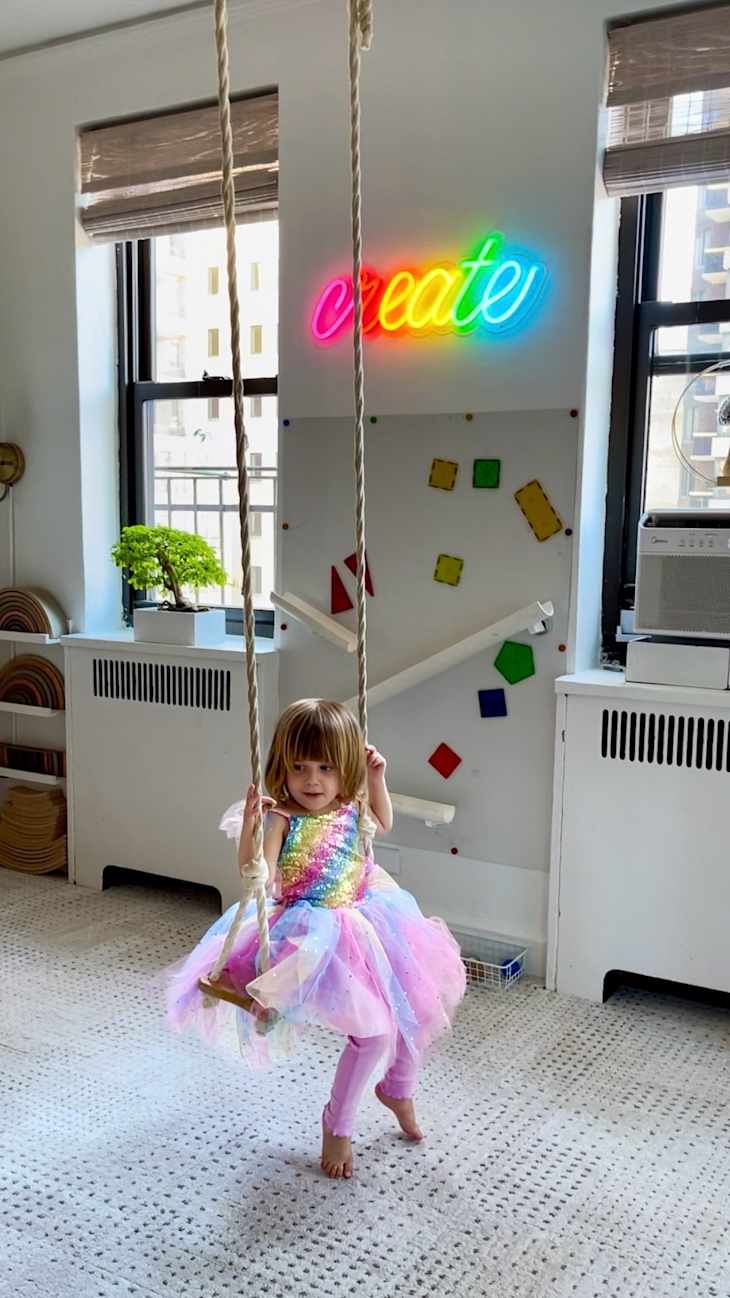
4. It’s good for adults, too (seriously).
Play is the work of childhood—but it turns out it’s good for adults, too. Research shows that play boosts dopamine, reduces stress, increases creativity, and helps us stay flexible—mentally and physically.
And beyond the science, swinging taps into something deeper. That freeing rush as you pump your legs higher and higher, knowing something big is coming—and letting go anyway. You’re fully present for that moment. Eyes wide. Heart open. Most of us only feel that kind of freedom in childhood. But what if we didn’t leave it there?
Whether you’re stretching your back in a yoga trapeze or taking a few quiet minutes to sway and breathe, a swing can remind you: your home can hold joy and ease—not just for your kids, but for you, too. Whenever I share a home tour, someone always comments that it looks like I love our play space more than the kids. And honestly? They might not be wrong. I’m trying to create a home where play, regulation, and connection are woven into the rhythm of our daily lives—not just for childhood but for our whole family.

Ready to swing? Here’s how to start.
If I convinced you, here’s how to bring swing magic into your home:
- Consider your space. Measure your wall distances and clear floor space before purchasing. Most swings need at least 6 feet of clearance on all sides.
- Start simple. If you don’t have much clearance, a doorway swing is a great place to start. No drilling required, and it can be tucked away in minutes. Just note: it’s limited to back-and-forth motion.
- Think versatility. If possible, install multiple hooks to accommodate different swing types. We use a three-hook suspension system that supports both single- and multi-point swings. Adding a swivel hook (ceiling-mounted or attached via carabiner) allows for spinning—and takes hammock swings to the next level.
- Get the installation right. Your ceiling — whether drywall, plaster, or anything else — is just the wrapping paper. Never anchor directly to it. You’ll need to find the beams or joists hiding behind it and anchor into those. This isn’t usually a DIY job. Hire a licensed contractor who can install hardware rated to hold at least 250 pounds, and all the giggles, twists, and tumbles that come with it.
I started our swing journey with modest expectations: just a way to burn energy on rainy days. Three years later, it’s become the heart of our home: the reset button, the giggle generator, the connection point we all gravitate toward.
Because something magical happens when we swing: we remember what it feels like to be fully present—suspended between effort and surrender, between earth and sky. Even in a home with climbing walls and monkey bars, it’s the simple back-and-forth of our swing that reminds us, daily, that joy doesn’t need much space at all.
It just needs a little freedom to let go.