
How to Babyproof Your House
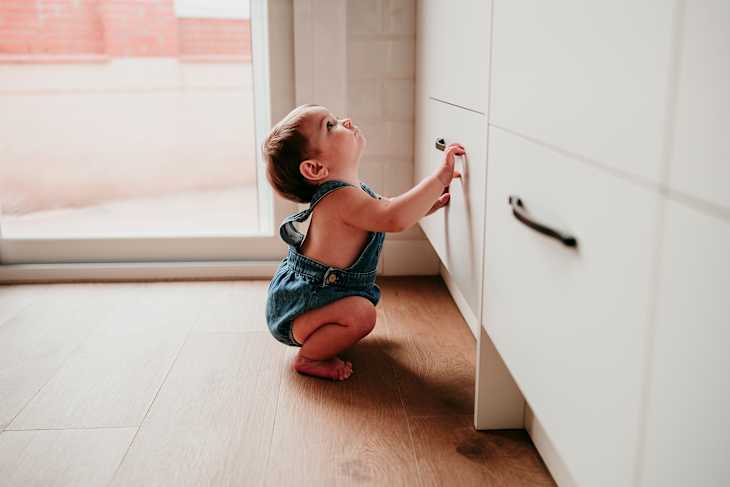
Babyproofing your house can feel like a Herculean task. Once you start thinking like a baby, you suddenly realize that there are just so many hazards in your home.
One of the best pieces of advice I got when babyproofing my home was to crawl around and look at my home from my baby’s perspective. There are so many enticing things down there: outlets, long-forgotten small toys under the bed, cords, and more. While every home will present different risks and challenges when it comes to babyproofing, this overview provides a good start to babyproofing your home.
When Should You Start Baby Proofing?
Tiny newborns don’t typically need a babyproofed home, but they’ll be on the move before you know it. As soon as your baby starts rolling, scooting, crawling, or otherwise moving around, you’ll want to make sure your home is babyproofed.
Baby Proofing Essentials for Every Room
1. Cover all outlets.
Babies can get injured by trying to stick toys in outlets, pulling on plugs, or putting their fingers in outlets. It doesn’t help that outlets tend to be right at baby’s eye level. Thankfully, this is one that’s easy to make safe with small outlet covers, outlet cover boxes, or self-closing outlet covers.


2. Cover sharp corners and edges.
From baseboard molding to coffee tables, there are many hard and sharp edges that could injure your child. Use corner and edge protectors to soften any of these dangerous areas.

3. Anchor furniture.
Heavy furniture can present a serious injury risk to babies and kids. Use wall anchors to anchor all tall and heavy furniture to the wall. This might include dressers, mirrors, desks, TVs, and bookshelves.

4. Keep your baby’s crib safe.
When it comes to your baby’s crib, you’ll want to make sure they can’t reach any outlets, cords, or other dangerous items from their crib. Inside the crib, babies under 1 year should have a firm, flat sleeping surface with no extra items such as lovies or pillows. To learn more about safe sleep, check out the American Academy of Pediatrics’ (AAP) dedicated page.
5. Secure drawers and cabinet doors.
Securing drawers and cabinets can prevent babies and kids from accessing cleaning chemicals, medications, and other dangerous items. Securing drawers in dressers can also help prevent the furniture from tipping over (although you’ll still want to anchor it to the wall too).
6. Remove or secure cords.
Cords can present a serious strangulation hazard. Remove any cords that you can, and keep the rest out of reach by securing them to the wall or under the carpet, putting them away when not in use (think: phone chargers), or putting them in inaccessible areas. Cords can include the cords on window blinds, charging cables, and cords to power electrical items. This product is wonderful for keeping cords out of sight and away from little hands!

7. Install baby gates.
Baby gates can be your best friend; they allow you to only babyproof a portion of your home while you keep your baby in the safe area. They can also keep your baby away from dangerous areas of your home such as steps or fireplaces. When using a baby gate near the steps, be sure to use a wall-anchored gate and anchor it directly into the studs for maximum security.
8. Keep small items out of reach.
Whether it’s a piece of dog food or a plastic wrapper left under the couch, small choking hazards can be all over your home. This is a time when it’s a great idea to get on your hands and knees and check for anything small your baby might be able to put in their mouth. Do this regularly — especially if you have other kids or pets — so you can clean up any small items on the ground.
Other items that could pose a risk to your child include plastic bags, jump ropes, and dropped medication.
9. Store dangerous items out of reach.
We all have many items around our homes that are necessary, but dangerous to our kids. Cleaning products, batteries, knives, alcohol, and medications, for example, should all be stored out of reach. You can keep items high where your child can’t reach, in a locked safe, or behind childproof latches.
10. Lock the toilet.
To prevent your child from falling head-first into the toilet (and to prevent them from throwing your keys in there), use a child-proof toilet lock to keep the toilet lid shut.

11. Consider stove safety.
If your child is able to reach the knobs to turn on the stove, install knob covers. When you’re cooking, use the back burners whenever possible, and always keep pot and pan holders pointed to the back of the stove.

12. Secure windows.
Particularly on the second story or higher, you’ll want to lock and secure all windows. In addition to the locks that most windows already have, you can purchase additional window locks that only allow windows to open to a certain point.

13. Secure doors.
Once your child is old enough to open doors, place child-proof locks on any doors you don’t want them to be able to open. Consider doors that give access to outside, stairs, bathrooms, and garages.