
My Smart Meatball Trick Makes Them Taste a Million Times Better (and Cook Faster!)
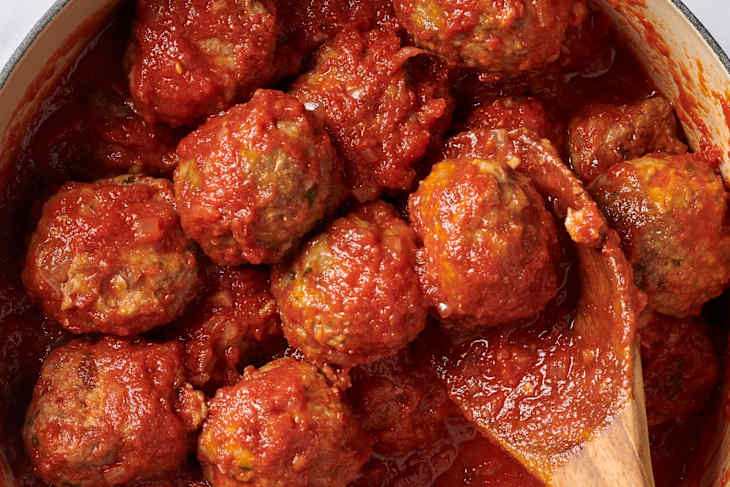
Listen, I know we all love the quintessential round meatball, perched merrily atop a pile of spaghetti with tomato sauce. It’s classic. It’s comforting.
But the truth is, making meatballs that are actually round is kind of a pain. Most meatball recipes call to brown them before adding them to sauce, which gives them a lovely flavorful crust. However, if they’re properly tender, they inevitably collapse a little (or a lot) under their own weight in the pan, meaning what you actually wind up with are little oddly shaped pyramid things, rather than the pretty, perfectly spherical meatballs that exist in your mind’s eye.
A better idea came to me by way of my local pizza place. After seeing their large-format meatballs being cooked in the shop, and watching them get pressed flat on the grill top, I recently tried lightly flattening my own meatballs at home as I was browning them — and oh boy, is that the move.

Why You Should Be Making Flat — Not Round — Meatballs
Here’s the thing: For me, a tender meatball is kind of everything. I like my meatballs so soft and pillowy that they practically disintegrate when they hit my tongue. The problem is, if they’re ultra-tender then meatballs fall apart when you try to fry them. Oven-baked meatballs fare only slightly better, retaining their shape on every side but the bottom, leaving you with a mostly round meatball with one flat side (and minus the browned crust you get on the stovetop). Stop fighting it. Press your meatballs flat.
Not all the way flat — I’m not a monster — just flat enough to cook them more or less like a tiny (thick) burger. If you’re no longer worried about the structural integrity of your meatballs, you’re free to add whatever you want to them, moisture content no longer being a concern. Add an extra egg, grate in even more onion, add all the fresh herbs you can handle.
If you’re not feeling precious about the shape of the meat in the final dish, it sure does make the cooking process quicker and easier. You can cook them until they’re well-browned on just two sides, instead of the frustrating task of attempting to turn them in such a way as to evenly brown what should ostensibly be a sphere (but almost never is by the end). In the end, they’re arguably in an even better shape for things like sandwiches, wraps, and pizza. I add them to grain bowls and noodle dishes, too. I’m begging you to try it. Free yourself of the tyranny of this one rule. Ask yourself, why must meatballs be round?
Tips for Pressing Meatballs Flat
- Don’t press them too hard. You want them lightly flattened, not pressed thin.
- They’re ideal for sandwiches. Even if you’re uninterested in a non-roundish meatball for your spaghetti, at least give it a try the next time you’re making a meatball sub, wrap, or even putting mini meatballs on pizza. The flattened meatballs make for an easier cooking and eating experience in these cases.
This post originally appeared on The Kitchn. See it there: My Unconventional Meatball Trick Makes Them Taste a Million Times Better (and Cook Faster!)