
The “Magical” 2-Ingredient French Sauce I Use to Make Veggies Taste Incredible
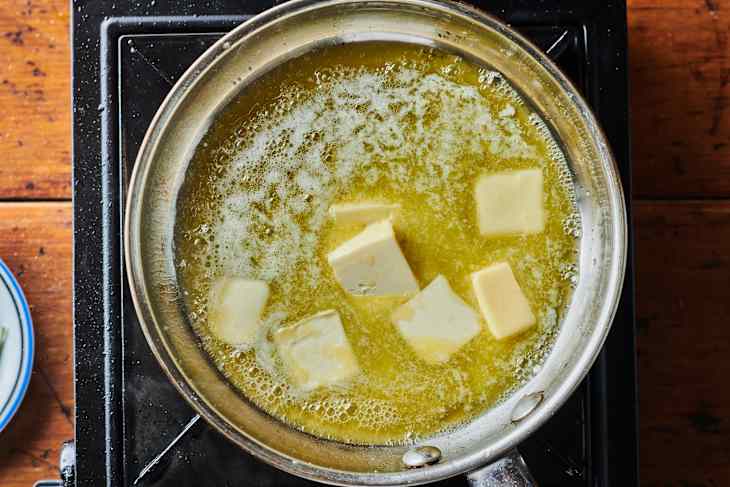
After culinary school in New York City, I worked as a line-cook in a swanky SoHo restaurant adjacent to a trendy hotel. The location and vibe meant we had VIP tables nightly including well-known actors and musicians. The menu was a mix of global flavors and seasonal ingredients, but it was all rooted in classic French technique. It was there I became very familiar with the two-ingredient butter sauce beurre monté.
Essentially just butter and water gently heated together until it becomes a thick and smooth sauce, we used it on one of the most popular side dishes, an asparagus and herb plate that was prepared at my station. One night my chef flew at me and barked his order for the most perfect asparagus I had ever made. He breathed down my neck as I warmed the previously blanched asparagus in a spoonful of beurre monté until hot, but not hot enough to break the emulsion, and garnished it. He trashed my first attempt, hurling colorful language at me before whisking the next plate out to Nicole Kidman. It’s been over 20 years since I worked the line, but I still remember two things vividly: the intensity of that moment, and the delightful combination of asparagus and beurre monté. Now I use it on all my favorite spring vegetables, and it works just as well and tastes just as delicious.
What Makes Beurre Monté So Great
This easy, classic French sauce is made from just butter and water, but the result is a thick and creamy way to dress vegetables, from sautéed radishes to steamed asparagus. Beurre monté requires only a fraction more work and time than melting butter on the stovetop or in the microwave, but the result is vastly superior. When you melt butter, it naturally separates into water, butterfat, and milk solids. This is great if you are making brown butter and need to cook out the water and toast the solids, but when tossing with cooked vegetables what often happens is that most of the butter slips off, leaving lightly coated, slightly greasy-tasting vegetables, and a puddle of butter below them.
Beurre monté solves that issue by preventing separation and making a creamy sauce that is thick, deceptively light, and clings to the vegetables in a thick, glossy coating. Also, its clingy qualities come directly from the butter — so unlike, for example, honey glazed carrots you don’t need a sweetener to create that signature gloss or thickening power. Beurre monté also isn’t tied to a specific cooking method, which adds to its versatility as a finishing sauce. Toss it with steamed, boiled, roasted, or grilled vegetables!

How to Make Beurre Monté
- Cut the butter into pieces and refrigerate. Gradually whisking pieces of cold butter into warm liquid is key to a stable emulsion, so before you get started, slice butter into 1/2-tablespoon to 1-tablespoon-size pieces and keep them cold. For 2 pounds of vegetables, start with 1/2 stick (4 tablespoons) of butter.
- Gently heat water in a small saucepan. Warm a small amount of water, 1 tablespoon for half a stick of butter is enough, until steaming over low heat in a small saucepan. It’s easier to whisk in a saucepan than a low-sided skillet where the contents might slosh out.
- Gradually whisk in cold butter pieces. Once the water is steaming, grab the butter from the fridge and drop in a chunk. Start whisking constantly, adding the next piece once the first is almost totally melted and repeating until all the butter has melted. The liquid will morph from thin and pale to thick, smooth, and soft yellow. If you start to see any bubbles around the edge of the pot, briefly remove it from the heat to prevent boiling while whisking.
- Season and keep warm. Season the sauce with salt and pepper, if you like, and use it right away or keep it warm until the vegetables are ready. Toss the sauce with cooked vegetables or spoon it over top of them on a platter. Because it’s essentially just butter, it will solidify as it cools, but if you keep it warm it will stay fluid.
Tips for Making Beurre Monté
- You can fix it if it has separated. Ideally, a fully emulsified sauce will stay smooth even as it cools (as long as it doesn’t boil), but a small bit of separation can happen — and it’s totally OK. If the beurre monté is still warm, try vigorously whisking it back together first, as it sometimes just needs a little manual encouragement to stay together. If it has cooled, gently warm it over low heat while whisking constantly, but avoid high heat or boiling which just promotes further separation.
- It’s easy to flavor. Although the simplicity of the sauce is partly why I love it so much, you can easily flavor it, just like in my recipe for Caesar butter. For some acidity, add a tablespoon of fresh lemon juice with the water at the beginning of the recipe, or stir in some spices, finely chopped fresh herbs, or minced garlic while the beurre monté is warm.
- Save any leftover sauce — even if it separates. Because you need enough liquid to properly whisk, it’s hard to make a tiny batch of beurre monté. Because it’s essentially just butter, you can save any extra in a food storage container in the refrigerator. Use it to cook with the same as any other butter (although I would skip baking projects due to the added water).
- Salted, unsalted, cultured, or European butter all work. I prefer starting with regular, unsalted butter so I can season it to my own liking, but the technique is the same if you prefer salted butter, the tang of cultured butter, or extra-rich European-style butter.
This article originally published on The Kitchn. See it there: The “Magical” 2-Ingredient French Sauce I Use to Make Veggies Taste Incredible