
I’m a Registered Dietician—the No. 1 After-School Snack Tip I Give Parents: “Do This and You Can Stop Worrying”
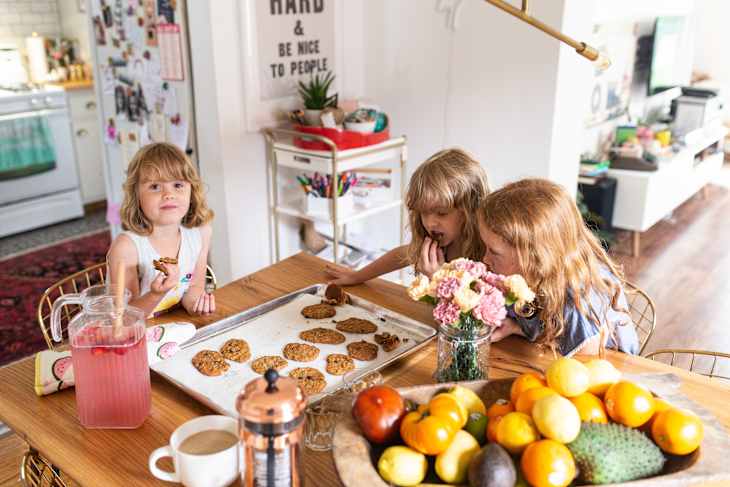
In an ideal world, the after-school snacks you set out for your kids would fit the following criteria: your kids look forward to eating them, and you feel good about serving them. As a food editor who is also a Registered Dietitian, here to tell you that it’s totally possible to achieve this. Here’s the advice I tell parents looking for balanced after-school snacks.
My no. 1 tip and one of the simplest things to keep in mind when making after-school snacks? Always include two of the five basic food groups. (That would be fruits, vegetables, grains, protein, and dairy, in case you need a refresher.) By doing this, you’re quickly ensuring the snack is balanced and part of the day’s dietary needs, so you can stop worrying! It also means you’re most likely incorporating some protein, fiber, or healthy fats into the mix, which makes for a snack that has some staying power.
5 examples of snacks that include two food groups
- A slice of whole-wheat toast slathered with almond butter = grain + protein
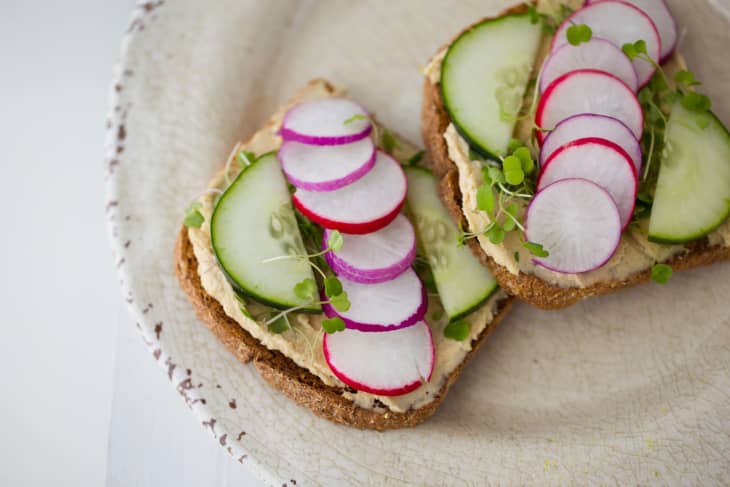
- Carrot sticks dipped in hummus = vegetables + protein
- A yogurt cup sprinkled with granola = dairy + grain
- An apple and a string cheese = fruit + dairy
- Tuna salad on whole-wheat crackers = protein + grain
4 more tips for balanced after-school snacks
1. Embrace fruit and veggie dips.
Along the same lines of including two food groups, it can sometimes feel like a challenge to make one of those food groups a fruit or a vegetable. Let dips be your go-to solution. Whether it’s a tangy yogurt dip or creamy avocado dip for veggies or a honey-sweetened peanut butter dip for fruit, making a dip is the quickest, easiest, and tastiest way to turn everything from celery sticks to banana slices into a more exciting — yet no less wholesome — snack.
2. Packaged snacks are fine, but skip the overly processed stuff.
If there are more ingredients on the label than you can quickly count — and if you can’t pronounce some of those ingredients — that’s probably not a great sign. While it’s hard to deny how wholesome homemade snacks can be, we don’t exactly live in a world where there is time to churn those out each and every week. Packaged snacks can be great choices if they aren’t filled with lots of junk. Things like string cheese contain, well, just cheese, and hummus usually contains a simple mix of chickpeas, tahini, oil, and garlic.
3. Include your kids in the shopping.
Involving your kids in the planning and shopping process for the week’s snacks is an easy way to ensure your pantry is full of wholesome things they actually want to eat. Take them on your grocery store run to browse the shelves with you and hunt down snacks you both approve of that they’ll look forward to grabbing when they walk in the door after school.
4. Step away from the television or computer.
Mindless eating is the easiest way for anyone, kids and adults, to overeat. That’s especially true when it comes to snacking, since the couch and a bag of potato chips always seems like an enticing combination. Try to bring your kids to the table to eat their after-school snack so they can focus on and enjoy what’s in front of them instead of the screen.
This article originally published on The Kitchn. See it there: 5 Tips for a Better After-School Snack, According to a Dietitian