
How to Spring Clean with Kids (Really!), According to a Pediatrician and a Professional Organizer
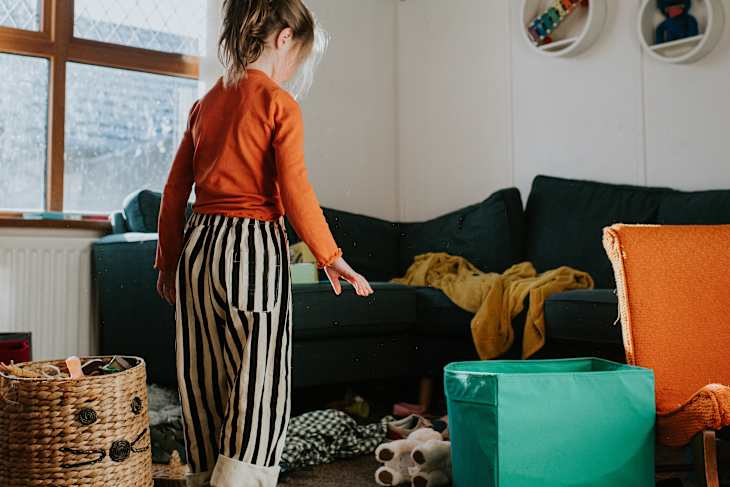
Spring has sprung, and along with that first “throw the windows open” warm day often comes the beginning of spring cleaning. The endless crumbs, missing socks, and lone water cups (why so many used glasses?!) can build up in the winter season, so spring cleaning feels like a fresh start.
Eighty percent of American families plan on spring cleaning, according to the American Cleaning Institute. So, this spring, consider adding kids to the endeavor, giving them chores that fit their age and skill level, whether it’s decluttering, organizing, learning to clean a toilet for the first time, or dusting off a bookshelf.
“When kids are part of the process, they start to understand how their stuff works in their space,” says Leslie Kilgour, professional organizer and founder of Get It Straight on Long Island, New York. “They learn where things belong, how much they actually have, and what it takes to keep a room usable,” she says. Kilgour adds that it helps create a foundation for the future. “I see this a lot when I’m working with families or helping teens get ready for college. The kids who were included in organizing growing up are usually much more comfortable managing their own rooms, closets, and, eventually, dorm spaces.”
Kids’ resistance to lending a helping hand shouldn’t stop you from having them participate in the spring clean, Kilgour says. A little prodding is worth the benefits, as she notes that kids are often more likely to maintain organizational systems and clean spaces if they have helped in the process. “Even little things, like letting them decide how their desk drawer is arranged or how they want to group their books or art supplies, gives them ownership,” she says.
Here’s how to make it work with kids involved.
Start Small
The momentum of spring cleaning might have you motivated to take on the entire house in a single day, but your kids might not be ready for that level of commitment.
“Instead of saying ‘clean your room,’ it works better to break it into small zones,” Kilgour explains. “Kids can handle that a lot better, and they feel a sense of completion more quickly.” Those smaller wins are the things that just might keep them cleaning and organizing for a longer period of time.
Kilgour says it often works best to take it room by room, focusing on surfaces, like desks, dressers, and nightstands, because even having those spaces clean can make the entire room feel calmer right away.
“With younger kids, you can make it a little game: Put on music and see how many books or stuffed animals you can sort in five minutes,” she says. “With older kids or teens, I like to talk about function. For example, if a kid uses their desk for homework and art, we’ll organize it around those activities so the things they use most are easy to grab.” The kitchen is another helpful place to get kids involved. “You can have them help check snack bins, pack donation boxes, or wipe down shelves. It sounds simple, but those small tasks teach them how homes actually run.”
Safety First
You obviously won’t have your toddler cleaning your ceiling fans, but there are other hidden dangers to keep an eye on, like cleaning solutions, even nontoxic ones. “There are some nontoxic cleaning products, such as Seventh Generation, that are gentler. However, the best rule of thumb is to avoid exposure to cleaning products or access to the squirt bottles for little hands and curious hearts,” says Jennifer Walker, mom of three, pediatric nurse, and cofounder of Moms on Call. “Having a squirt bottle of water for the kids is a great alternative,” Walker says. “And always keeping cleaners locked away so that kids do not have access to those products is advised.”
Accidents happen, though, so make sure you have the numbers for poison control and your pediatrician on hand. “Coming from a mom whose son sprayed 409 [cleaner] in his own face, even as a pediatric nurse, it is good to have the number for Poison Control on hand,” says Walker.
Let Them Copy You
While it might not seem like it after picking up the fourth stray sock in the middle of the living room floor, kids do tend to mimic what they see the adults in their lives do, so set them up for success.
“Kids are always interested in doing the things that adults do,” Walker says. “Provide the same type of tools that we use. So if we are cleaning the counter and they have a rag just like yours, it is a fun way to not only make them feel included, but it helps to make them feel like they can navigate some of the responsibilities that life requires.”
Walker says you can involve them with your own body language and confidence, drawing them into the experience and helping everyone enjoy spring cleaning more. She suggests telling them which direction the circles should go when cleaning the counter or how many sweeps it takes to get the little bits into the dustpan. “We can even play a game with the vacuum, where they have to find the un-vacuumed spots to stand on in the room until there are none left.”
Teach the Why, Not Just the How
Cleaning isn’t always high on the list of fun things to do, but helping your kids understand why we clean and how a fresh start can help us feel better is a key part of tackling cleaning together. It’s also an important part of our kids learning that some things in life aren’t enjoyable but are still necessary.
“As they watch us do things that may not be our favorite, they do begin to develop a nice, healthy relationship with life’s normal expectations,” Walker says. “We can make these times as fun as possible, but they may not always be our favorite thing to do, and that is OK. When our expectations are more on participation and inclusion, we tend to enjoy the process together.”