
See How a Stager Transformed a “Chaotic” Living Room into a Bright, Functional Space
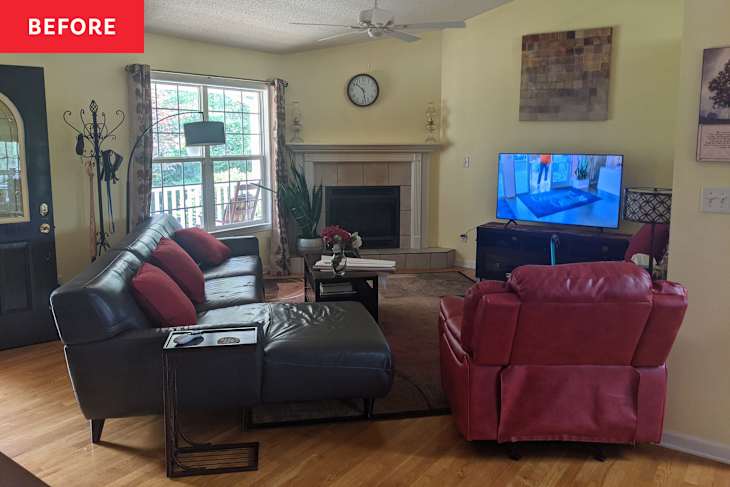
Staging a home can often conjure up images of a total transformation: A homeowner’s belongings removed to make way for different furniture and replaced artwork. This kind of staging (known as vacant staging, as the home is typically sitting vacant) is a great way to demonstrate a home’s potential and appeal to buyers with brand-new and trendy furnishings. But it’s also typically more expensive, as the stager will decorate the space from scratch, hire movers, and possibly buy new pieces if they don’t have furniture appropriate for the project.
Occupied staging is a common alternative to vacant staging that utilizes what a homeowner already has to create a fresh space. Stagers may pare down a home’s belongings to better maximize the footprint or add a few missing pieces, but for the most part everything is done with the existing furniture inside a home.

This Asheville, North Carolina, home is the perfect example of how occupied staging can totally transform a space without a huge financial investment. Here’s what Libby Fehsenfeld, founder of Tralala Interiors and the stager who worked on the project, did.

She worked to make the open spaces feel cohesive and less cluttered.
“I specialize in occupied staging, so the goal of any stage is to use as much of the homeowner’s furnishings as possible and to stage the space affordably,” explains Fehsenfeld. “My goal was to make the open spaces more cohesive with an edited color palette, and make the space less cluttered and chaotic feeling.”

She painted the walls.
The first thing Fehsenfeld did was paint. The living room, kitchen, and dining room had yellow and purple colorblocked walls, which didn’t feel welcoming. So the stager painted a neutral warm gray throughout the communal rooms. Next, she wanted to tackle the furnishings, which felt crammed and too big for the compact living room.

She removed furniture that crowded the space and was awkwardly laid out.
“We removed furniture and decor items that were crowding the space and didn’t fit into the warm color palette we were going for,” the stager explains. “The couch was previously set on an angle, which looked awkward and was blocking the entryway. Turning the couch to be parallel with the wall created a nice walkway when you entered the room. It also put the seating area’s focus on the fireplace, highlighting that as the focal point of the room and drawing attention away from the TV.”

She spent as little money as possible.
Fehsenfeld and the Realtor she partnered with brought in a new dining room table, but everything else was already in the home. Other than the cost for her services, the only investments made were for the painting, furniture removal, and $20 on some fresh greenery to place in vases around the house.
This stage shows how paring down your own items and working with what you already have can create an attractive, efficient, and comfortable space.
This post originally appeared on Apartment Therapy. See it there: See How a Stager Transformed a "Chaotic" Living Room into a Bright, Functional Space