
The 9 Most Important Toy Safety Tips to Know For Babies
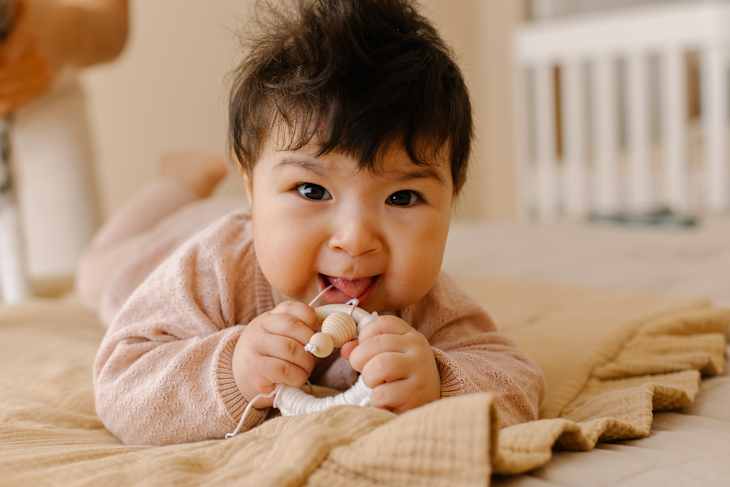
Babies and toddlers will play with just about anything, whether it’s the box a toy came in or your new water bottle. Before just passing any toy or object their way, though, it’s important to take safety into consideration. Notorious for putting things in their mouths and just not understanding how dangerous some things around the home can be, babies need your help to keep them safe.
Here are some tips to help keep your baby safe when it comes to toys and play time.
Check age recommendations.
Manufacturers make age recommendations for toys based on safety and development. There are many toys on the market that are only approved for kids ages 3 and up due to small pieces that could be a choking hazard. Even if a toy looks like it could be fun for a baby, check the label to make sure it is approved for infants. Some toys that don’t look like a choking hazard, but they might have small pieces that detach or parts that are dangerous if swallowed, such as magnets and balloons.
Be wary of button batteries.
Many toys and books (even some approved for infants) contain small button batteries. If your baby gets one loose and eats it, it’s a medical emergency. Whenever possible, avoid toys with this type of battery, and regularly check battery compartments to ensure they are secure.
Use a small objects choking tester.
Before giving your baby anything to play with, whether it’s a toy or household object, you can double check the safety by using a small objects choking tester. This inexpensive tube can help you determine if an object is a choking hazard. If it fits in the tube, it’s a choking hazard, and if it doesn’t, it’s not considered a choking hazard.
Avoid small circular objects.
Any circular object equal to or smaller than 1.75 inches in diameter is a choking hazard. Objects this size can easily slide into your child’s throat if they put them in their mouth. These include objects like small balls, marbles, and coins.
Test the toy yourself.
Before giving a toy to your baby, check it over yourself to make sure there are no loose parts. You can even try ripping and pulling at it to make sure your baby won’t be able to get any pieces off. If there are any buttons or small pieces tied onto the toy, make sure they are secure. In addition to loose pieces, check for any sharp parts, loose strings, and parts that could pinch your baby.
Double check second-hand toys.
Second-hand toys are a great way to save money and reduce overconsumption, but you’ll want to double check the safety of these toys. Since they’ve been played with before, they might be more likely to be broken or have pieces that could fall off. Additionally, some older toys, especially those made before 1978, might have lead paint on them.
Check the volume.
Toys that are too loud could potentially damage your baby’s hearing. Before purchasing a toy that makes sound, check to see if you can turn the sound down or off entirely. Most experts recommend keeping noise at or below 60 decibels for babies. You can easily check this using an app on your phone.
Keep baby away from unsafe toys.
Keeping your baby safe can be difficult when you have older kids. To keep the baby away from unsafe toys, consider keeping all unsafe toys in a specific room, such as the older child’s bedroom. Another technique is to have one safe room or area where baby can roam and play. You can section this area off using baby gates or a play pen.
Check for recalls.
Sometimes, toys that were once considered safe may be recalled due to safety concerns. You can check the CPSC site or recalls.gov regularly to check if any of your baby’s toys have been recalled. If you have a toy that you believe is unsafe or needs to be recalled, you can report it to the CPSC here.