
Is It OK to Let Your Kid Go Out Without a Coat?
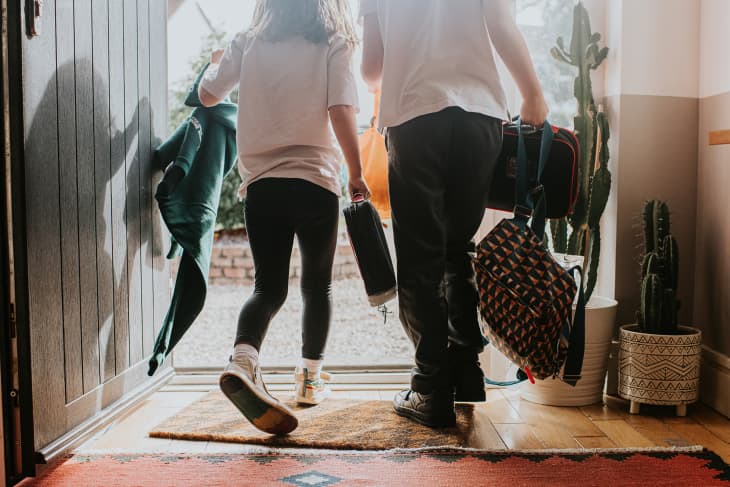
There are a few negotiations between caregivers and children that seem universal — kids refusing to eat their vegetables at dinner, parents insisting on a certain bedtime when little ones would rather stay up late, and, one that’s come up a lot for my two kids now that it’s winter, children refusing to wear a coat when it’s cold outside. It is truly a tale as old as time, but that doesn’t make it any less frustrating or easier to navigate.
It can be stressful to force children to wear their winter coats, but not doing so can feel just as bad. Is it OK to let them go to school without a coat? Won’t my kid get sick? Won’t other parents judge me if my son goes to school in shorts when it’s under 40 degrees outside? While, ultimately, this discussion may be different for each family, here are some things to consider when making the decision.
Is it okay to let your kid go outside without a coat?
This discussion is also age-dependent. The American Pediatric Association recommends dressing older babies and young children in one more layer of clothing than an adult would wear in the same conditions. As kids grow and develop their understanding of the weather, having a weather plan can help answer the question of whether or not they need a specific item of apparel. A weather plan, or agreement, looks a bit like a contract that you create with your child that says what action they will take when there is a certain type of weather.
Should I Insist On My Child Wearing a Coat When It’s Cold Outside?
There is scientific evidence that shows that kids perceive colder temperatures differently than adults. There are a few reasons for this: One is the simple truth that kids are typically more active, moving their bodies and generating heat, while adults stand around shivering. Another factor is the presence of something known as ‘brown fat,’ which Dr. Michael Symonds described to The New York Times as, “ specialized fat, whose primary role is to generate heat.” A gram of brown fat produces 300 times more heat than any other tissue in the body, and kids have proportionally more brown fat than adults.
And speaking of scientific evidence, let’s talk about that age-old warning from Dr. Mom that you’ll get sick if you don’t wear a coat outside. As well meaning as it may have been, it’s not scientifically accurate. According to Parentdata.org, “By and large, this is wrong. Respiratory illnesses are caused by bacteria and viruses, not by being cold…The primary reason people associate colds with the cold is that when it’s cold, we tend to huddle inside together. And there is nothing viruses like better than people huddling inside together. Respiratory illnesses spike in the winter mostly because of our behavior, not the cold.”
That said, it is valid to want to protect kids from hypothermia, a medical emergency that occurs when the body’s core temperature drops below 95°F (35°C), and from frostbite. The best way to do this, according to the Mayo Clinic, is to dress kids warmly and bring them inside often to warm up (and immediately, if they begin shivering, which is an early sign of hypothermia).
This discussion is also age-dependent. The American Pediatric Association recommends dressing older babies and young children in one more layer of clothing than an adult would wear in the same conditions. (And in my experience at least, this is an easier sell than it is for school-age children.)
A Good Compromise: Create a Weather Plan
Knowing how to dress for the weather is a skill that adults often take for granted. When it’s raining, we bring an umbrella. When it’s freezing outside, we know we need a coat and boots. For kids, the connection between weather and wardrobe is less concrete. They are learning what different temperatures and weather conditions feel like and how to handle them. Natural consequences — like being cold or wet — are an important way that kids learn, and forcing a child to wear a coat before they understand why can have the adverse effect of teaching children not to listen to their bodies.
For toddlers and early elementary age kids, it can be useful to teach them about the weather by discussing it regularly. You can start the discussion by having kids look out the window and identify what they see, and then add your own information, noting the temperature and using visual guides to help them understand what it actually means when it’s cold outside.
As kids grow and develop their understanding of the weather, having a weather plan can help answer the question of whether or not they need a specific item of apparel. A weather plan, or agreement, looks a bit like a contract that you create with your child that says what action they will take when there is a certain type of weather.
For example, if your weather plan says, “When it’s raining, I will wear or bring a raincoat,” then you can refer to that agreement when making the decision of what outerwear the child needs that day. This can help eliminate the stress of a situational argument by providing clarity in advance. If a child doesn’t want to wear the item, they may bring it with them instead. The plan may also look different for various situations. For example, a child may need more layers of clothing, including hats, mittens, and scarves if they’re playing in the snow for an hour than they would if they’re simply going from the carpool line to the school building, so it’s important to consider the length of time outside and what activities they’ll be doing.
The most important thing about creating a weather plan is to collaborate on the plan with your child, creating a sense of buy-in so that they understand and agree with the parameters of the plan. As your child grows and refines their understanding of the weather, you may need to occasionally adjust the plan.
A Note on Coats and Carseats
Infants and toddlers may be more compliant with the idea of bundling up, but it’s important to keep their safety in mind when dressing them for the day. Healthychildren.org explains, “In a car crash, fluffy padding in a coat immediately flattens out from the force, leaving extra space under the harness. A child can then slip through the straps and be thrown from the seat.” Rather than strapping a child into a car seat when they’re wearing a puffy coat, they recommend removing the coat first and either putting the coat on the child backwards once they’re strapped in, or adding a blanket on top of the straps to provide extra warmth.
A Few Kids’ Coats We Love
- A great coat for babies: Baby Nano Puff Jacket from Patagonia. This is the kind of durable-but-lightweight coat that’s perfect for kids, and because Patagonia is known for their BIFL (buy it for life) quality, you’ll probably be passing this one down to siblings or younger friends when your child outgrows it.
- A great coat for school-age kids: Kids’ Drop Tail Down Sweater from Patagonia. I love this coat from Patagonia because it keeps kids warm and manages to cover their backside when they’re bending over to play.
- A great coat for toddlers: Kids Reversible Fleece Puffer from Primary. It can be discouraging to invest in a good quality coat for toddlers, knowing they’re going to outgrow it in a single season, but these reversible puffers from Primary are relatively affordable and available in a wide variety of gender-neutral colors.
- The best vest for kids: Kids’ Beans’ Down Field Vest from L.L. Bean. If your kiddo objects to their coat because it’s hard for them to move around in it, a vest might be a good compromise, and this durable down vest from L.L. Bean will keep them cozy while they zoom around the playground.
- A great kids coat for extended outdoor time: The North Face Reversible Shasta Full-Zip. With a water-resistant shell and a cozy, insulated interior, this lightweight coat is a great option for kids who need to be warm enough for outdoor playtime and still able to move around enough to run from snowballs.
- A great coat for wee fashionistas: All Weather Waterproof Coat from Mini Boden. Sometimes, my six year old refuses to wear her coat because it doesn’t go with her outfit. If fashion is the issue, these bright, poppy prints from Boden will help your little one learn to love the look of the coat, and you’ll appreciate how warm it keeps them.