
The “Home Phone” Is Back, and Your Kids Will Actually Love It
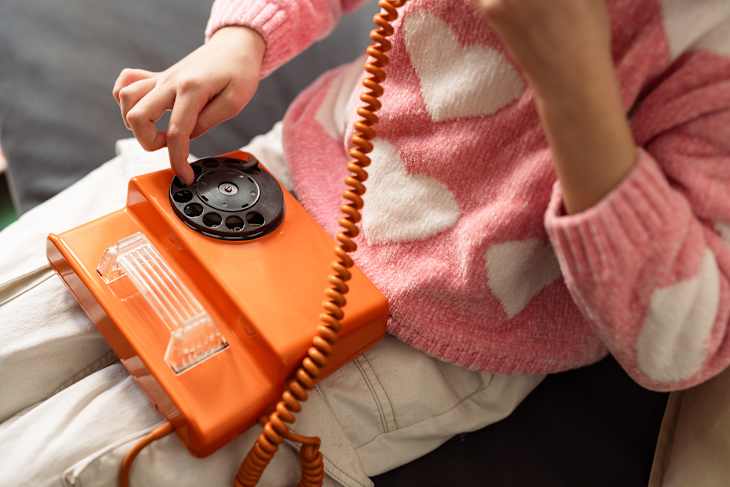
My kids have been begging for a phone since they were younger than I’d like to admit. They’ve turned cardboard boxes into play phones, imitating adults texting and scrolling, and watched over my shoulder as I used my own smartphone. As a parent of five kids under age 10, I’ve come to terms with it — they are officially immersed in a technology-obsessed culture. But that doesn’t mean I have to hand an elementary school-age kid a smartphone.
The more I’ve complained to my mom friends about the woes of technology, from trying to implement app limits on iPads to blocking certain channels on YouTube Kids, the more I’ve realized we’re all craving the tech of the 1990s.
“Old tech carries the appeal of simplicity on so many levels,” says Emily Edlynn, a clinical psychologist and author from Oak Park, Illinois. “It is not only simpler to operate; there’s so much less parental supervision needed compared with smartphones and iPads. In our increasingly complex age of technology, the simplicity of old tech can promise less stress in at least one area of our lives.”
As smartphones get smarter, a growing contingent of families and experts are considering simpler ways to stay connected, safe, and, yes, entertained. For many, it means choosing to either cut out tech completely, or find ways to let it in safely.
How Parents Are Embracing Old-School Tech for Kids
In the midst of my battle to get my kids off screens and into the backyard, I got a Tin Can, a home phone and “telephone club” that lets approved users chat voice to voice, without screens. I have a home phone for emergencies, but had become so sick of it ringing with spam calls that I turned the ringer off completely. The Tin Can, on the other hand, allowed me to control who can be contacted, and doesn’t use apps or texting, or allow any spam or scam calls.

Around the same time, my 7-year-old got obsessed with the idea of having an iPod. I remembered the freedom and simplicity of having my own iPod Shuffle as a teen, and thought about the screen-free peace of listening to whatever randomly came on, or hitting the next button, and bought him one.
These two small changes have helped me delay the demands for smartphones. Getting an iPod has afforded my son more choices over his own tech use — I didn’t have to set anything up for him, and I love watching him jamming to his songs while walking the dog in front of the house. It gives him a glimpse of the autonomy he’d been craving. And even though we eventually returned to a traditional home phone that can dial anyone, the Tin Can was also effective for quite a while. I still recommend it to everyone I can, especially if they have a pod of friends who can hop on board with it and get kids connected to each other. (Tin Can is currently sold out but will ship again in April.)

Janet Jay has a 5-year-old stepdaughter in Texas who is obsessed with vinyl records. “She loves getting to be the one who flips through the records and chooses what we listen to, looking at all the art on the covers and inside and asking us about it,” Jay says. Plus, dance parties! “It also means that we commit to at least one side of the record, but usually both: no jumping around from artist to artist, no AI DJ, no algorithm. Just music the way the musicians intended,” Jay adds.
Other parents are going low-tech or old-tech for safety and security. “For neighborhood play, we gave them walkie-talkies instead of cell phones. And it has been a great opportunity to see the use of imagination growing back as opposed to simply depending on messaging apps,” says Aziz Bekishov, parent of two children, ages 9 and 12, in Washington, D.C. “The biggest plus was peace of mind — zero advertisements, zero tracking, zero ridiculous notifications. Their concentration and sleep went up because they are no longer bouncing between screens. … It really reminded us that a connection doesn’t need WiFi to be meaningful.”

The Benefits of Limited Technology for Kids
We already know that too much screen time can be harmful to kids. Consider this study, which identifies “decreased physical activity, sleep disturbances, behavioral issues, lower academic performance, socioemotional challenges, and eye strain” as a few of the issues wrought by technology overexposure in kids ages 2 to 12. Anti-tech influencers and authors such as Jonathan Haidt, author of The Anxious Generation, advocate waiting as long as possible to give kids a phone, and even longer to consider allowing them social media access, which can carry even more risks.
There is a flip side, though: Similar to the debate over abstinence-only sex education, one could also argue that helping kids navigate modern technology versus banning it altogether can lead to healthier use.
“I encourage parents who are considering replacing new tech with old tech to be thoughtful about a couple of factors,” Edlynn suggests. She recommends finding a balance between using old and new tech, especially because children will need to develop skills to “flourish in a digital world.” She also warns against positioning tech as a negative thing. “Be cautious about our messaging around technology, which can be a big challenge these days with all of the anxiety and fears,” she says. “But the more neutral we can be about technology, with less judgment and fear, the healthier our child’s relationship will likely be with technology. We don’t want to make new tech so taboo that our children seek it more — and don’t tell us about it.”
So, as my own five kids keep up with their daily mission to convince me to let them call their friends and create their own YouTube channels, I’ll continue to try to walk the line as so many of us parents are doing: preparing them for a tech-filled future, while helping them hang on to their childhoods as long as possible.