
I Was About to Toss All My Loud Kid Toys — Then I Came Up with This Easy, Cheap Hack
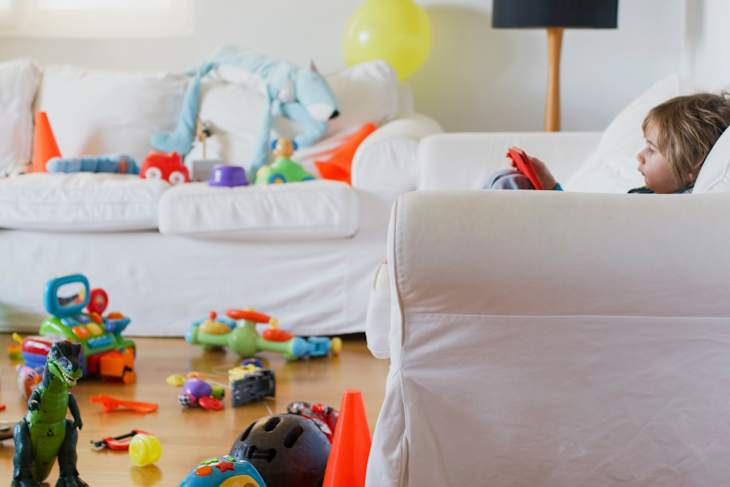
One thing that I wasn’t prepared for pre-parenthood was the sheer level of overstimulation I’d feel in every aspect of my body — but perhaps nowhere more regularly than in my ears. There are certain sounds that I’ve now grown accustomed to (even if they send cortisol rocketing through my system), like nighttime newborn cries and toddler tantruming. One of the sounds I don’t think I’ll ever get used to, however, is the beeping, sing-songing, and chiming of the loud toys my kids have collected and love. It’s as though I have a daily tolerance tank that, when at capacity with other sounds, will overflow and explode when I hear “the animals play, the animals play, the animals play all day” (IYKYK) one too many times in a 24-hour period.

Of course, I do love how easily these toys capture my kids’ attention. So it was this tension, then, that led me to invent — or, more likely, just discover for myself like so many parents before me surely have — the ultimate cheap trick for reducing a toy’s sound without tucking it into the donation bin.

At the time, I had recently moved and a roll of blue painter’s tape was sitting on the mantel. It caught my panicked eye just as one of my toddlers hit a button that caused some kind of commotion to go off in a brightly colored plastic toy that shall remain nameless. Even with the volume down (why are there only “loud” and “incrementally less loud” options on these things?), the noise was just too bracing for me.
I tore off a piece, then another piece, of the painter’s tape and applied it to the speaker grill on the back of the toy until it was at a more manageable volume. Voilà!

The result: My kids can play with their favorite noisy toys, and I can maintain some semblance of inner peace. It’s been surprisingly effective. I love that I can literally adjust the volume by adding or removing a layer of tape. It’s been a much kid-friendlier alternative to removing the batteries, or, worse still, hiding or tossing said toys.

Try it yourself: Just tear off a few small pieces of painter’s tape and apply one at a time to the speaker grill until you reach an acceptable volume. (It goes without saying that tape is a choking hazard, so be sure to supervise the kids.) I’ve since also tried masking tape and packing tape, to similar effect, although standard tape doesn’t seem to hold up as well. See what works best for you. Your ears will thank me!